When Richard Malusky started working in the woods in 1975, logging looked very different than it does today.
Crews were larger. Equipment was more manual. Safety practices were still evolving. Richard was just 19 years old, with a two-month-old son at home, looking for a better-paying job.
“I was making about $4.35 an hour,” Richard recalls. “I got hired to set chokers for $6.35 an hour, basically a 50 percent raise.”
Fifty years later, Richard is celebrating an extraordinary milestone — half a century with Weyerhaeuser, working almost entirely in the forests surrounding his hometown.
“I like being outdoors,” Richard says. “I enjoy the challenge, and I feel I’m really good at what I do.”
A CAREER BUILT IN THE WOODS
Richard’s career has evolved alongside the logging industry.
After setting chokers for a few years, he gradually moved into equipment operation. After spending about 20 years as a hook tender, he transitioned into shovel logging, where he has spent the past 15 years.
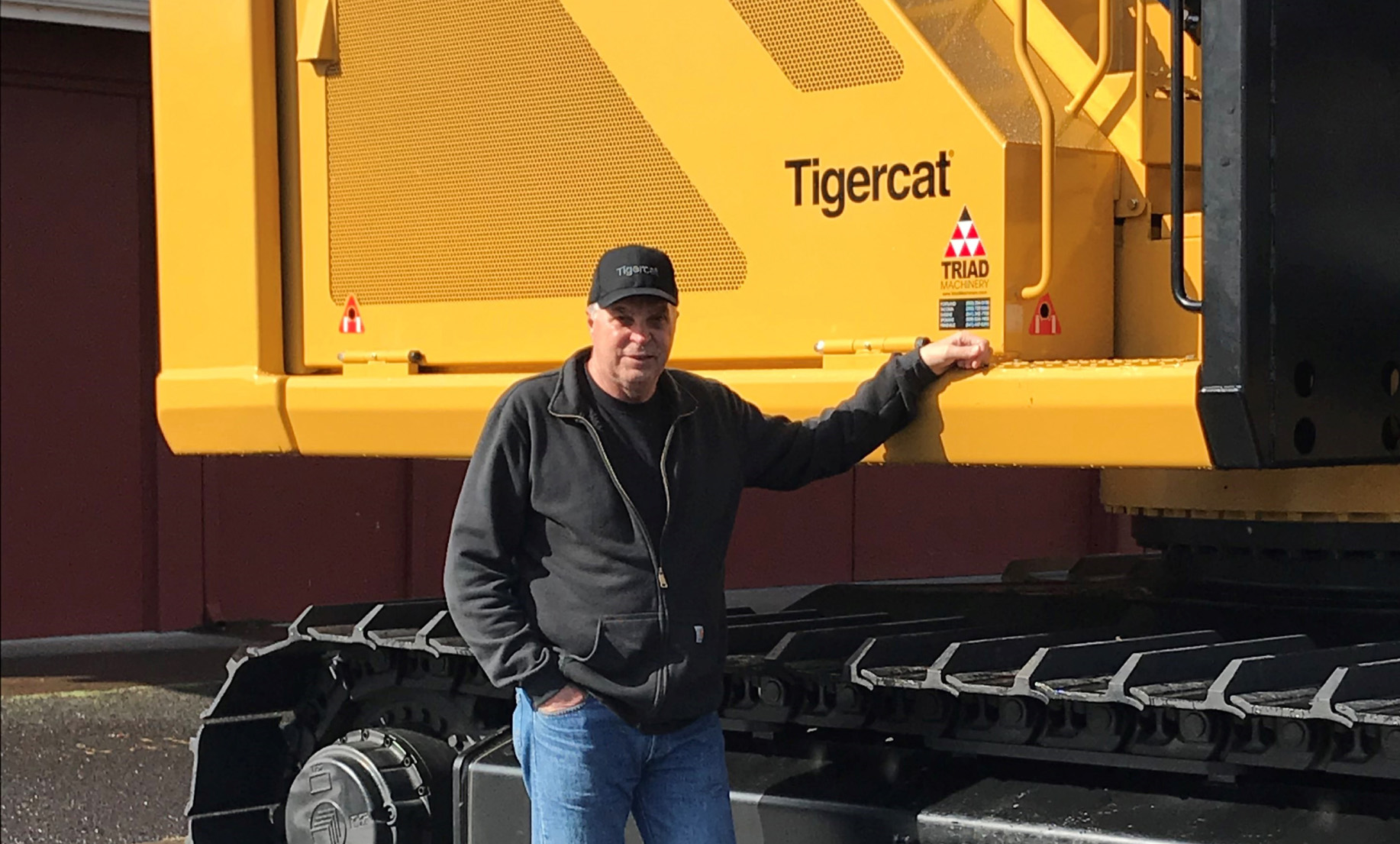
Today, he works on our Snow Peak tree farm, gathering felled timber with a hydraulic shovel and carefully moving it to roadside decks for processing.
“The hardest part is mentally figuring out how to make things work,” Richard says. “You never know what the lay of the land is going to be. There’s always a lot of challenges.”
Even after thousands of days in the woods, he says that problem-solving aspect is what keeps the work interesting.
WATCHING AN INDUSTRY EVOLVE
When he started, many of his coworkers had spent their careers working with older equipment and techniques that demanded intense physical labor. Today’s operations rely on advanced machinery that allows crews to accomplish work with fewer people while improving safety.
“It’s night and day,” Richard says. “Everything has changed. The equipment, the timber size, the crew size — you can get more done with less manpower.”
Richard believes one of the biggest improvements has been the industry’s commitment to safety.
“It’s completely different today,” he says. “There’s a lot more knowledge and a much different attitude.”
That evolution carries personal meaning.
Early in his career, Richard witnessed a fatal logging accident involving a fellow cutter who had started around the same time he did. The experience stayed with him, reinforcing the importance of doing the job safely every day.
PASSING ALONG EXPERIENCE
It’s a lesson he’s passed on while training newer employees.
“My advice is simple: Slow down and do the job right,” he says. “Slow is fast.”
Looking back, he credits one early mentor — a hook tender who taught him the trade and challenged him to become a better logger.
“I almost felt like he was a second father to me,” Richard says.
Today, Richard enjoys helping the next generation build those same skills while continuing to tackle the daily challenges that come with working in the woods.
A MILESTONE WORTH CELEBRATING
Although Richard originally set his sights on working until age 70 for practical reasons, reaching the 50-year milestone has become something he appreciates in its own right.
“It is kind of a bragging point,” he says. “It’s something nobody ever does anymore.”
Retirement may still be on the horizon, but Richard isn’t rushing toward it.
“I’m not sure what I would want to do in retirement,” he says. “I enjoy my work so much. I’ve met and worked with so many different teams through the years, and I really enjoy the people I work with. That’s one of the things I don’t want to give up.”