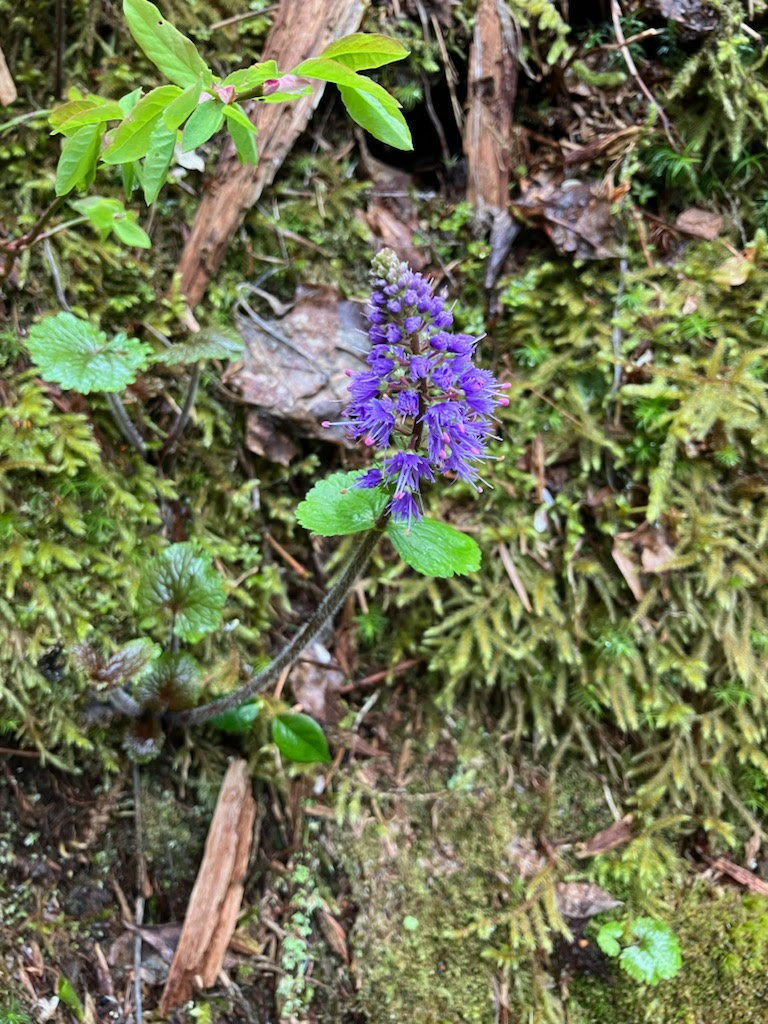
The fringed kittentail found on our Vail tree farm. “There are more rare plants in Vail than in many of our other tree farms,” Laura says. “It has unusually diverse habitat, from oak meadows in the Bald Hills to steep, wet forested slopes. Finds like this reflect the richness of the landscape.”
It’s not every day that a routine inventory cruise uncovers something that changes our scientific understanding of a plant’s distribution in the Pacific Northwest. But that’s exactly what happened last spring on our Vail tree farm in Washington when a timber cruiser with Olympic Forestry spied a small purple flower that looked unique enough to report.
That single moment of curiosity set off a rapid, coordinated response involving contractors, foresters, ecologists and the Washington Natural Heritage Program — ultimately confirming the presence of fringed kittentails (Veronica schizantha), a G2-ranked, globally imperiled plant. Its closest known population was last documented a decade ago in Washington’s Gifford Pinchot National Forest nearby.
The finding is now part of the official state and NatureServe databases, strengthening regional knowledge of this sensitive species and helping to ensure its long-term protection.
A DISCOVERY THAT STARTED WITH A QUESTION
Sean Ekman, who was working Olympic Forestry, noticed the distinctive purple bloom of a fringed synthyris during a routine timber cruise on the south end of our Vail tree farm. It was growing along a wet, mossy slope — prime habitat for the species, though few people know to look for it. He contacted Olympic Forestry company owner Kris Wilson, who alerted Weyerhaeuser inventory forester Josh Meek.
“Honestly, I wouldn’t have known it was a rare species,” Josh says. “It was pretty impressive Sean picked up on it. He’d recently been in a botany class, so he was really tuned in.”
After receiving the photos and location details, Josh forwarded the information to colleagues and environmental specialists, triggering a verification process that moved quickly and smoothly.
“It’s cool that our contractors feel empowered to share this kind of information,” Josh says. “It says a lot about the communication and trust we’ve built.”
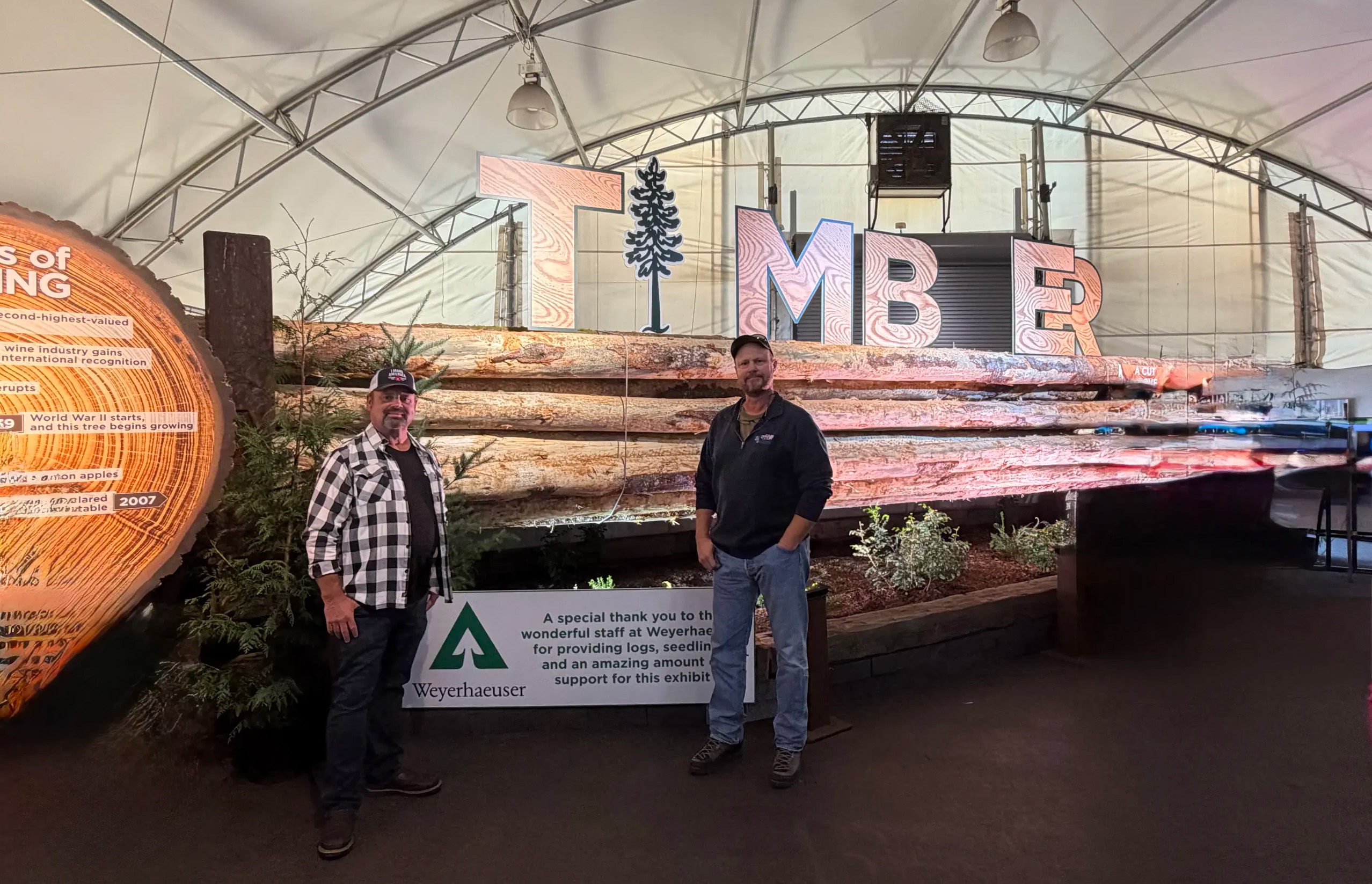
“I think this really shows we walk the walk,” says Laura, shown here presenting at last year's Sustainable Forestry Initiative® Annual Conference. “We say we protect biodiversity — and when something like this happens, we absolutely do. Our state conservation partners can see that we take this work seriously, and that builds trust, which benefits everyone.”
CONFIRMING A GLOBALLY IMPERILED SPECIES
The find landed on the desk of Laura Six, forest ecology scientist based at our Centralia office. Laura is one of many scientists in the company who both conduct research to better understand how we can protect and support biodiversity in our operations and provide in-house expertise when operational teams find a species or area of interest.
“I worked with the Washington Natural Heritage Program to confirm identification using the photos and habitat information passed along by our contractor,” Laura says.
Fringed kittentails prefers unique microhabitats like steep, wet cliff faces and cool, shaded forest edges. These environments are naturally limited and have been further reduced by changes in land use over the past century.
Because the species is classified as G2, which means it’s globally imperiled, the state botanists verified the find before entering it into the species database. The location is now reflected both in the state’s sensitive species records and in our internal Environmental Concerns mapping layer.
This reporting process ensures the plant will be properly protected when any management activity is planned in the area.
“When a species is ranked G1 or G2, we self-mandate protection,” Laura says. “When an activity is planned nearby, our system triggers a review so we can design the right buffer. It’s a case-by-case approach, but it always starts with safeguarding the population.”
TRAINING AND CULTURE MADE THE DIFFERENCE
While finding a rare plant is uncommon, Laura says the conditions that led to this positive outcome were anything but accidental.
“We’ve made sensitive species awareness a core part of our environmental training,” she says. “Between annual Sustainable Forestry Initiative® trainings, onboarding and practice audits in the field, we’ve built a culture where people know what to look for — and more importantly, they know who to contact for next steps.”
Of course, foresters, contractors and others working in the woods aren’t expected to have botanist-level knowledge of plants.
“The most important thing is communication,” Laura says. “Nobody has to know every species. They just need to know when something looks unusual or unique enough to report. That happened here, and because of that, we were able to add meaningful data to the state record. It’s an example of how our stewardship values translate into real life practice across the company.”
A MOMENT WORTH CELEBRATING
Our Vail tree farm is no stranger to ecological interest, but new discoveries like this remain rare. Laura estimates she’s seen only a few undocumented sensitive plant finds in more than a decade in her role.
“Discoveries like this one perfectly illustrate how Weyerhaeuser embodies our core value of sustainability and operationalizes our SFI certification requirements,” says Michelle Metcalf, EMS manager. “This new discovery also highlights that our training and education practices are effective, and that our teams understand the importance of protecting sensitive plants to maintain resilient ecosystems.”